Disability and language (including mental and physical health)

Many of us know and work with colleagues with visible disabilities or long-term conditions. However, many conditions are hidden, impacting a person's cognitive, emotional, or physical functioning, including their mental
health.

It is important that we respect the diversity and individuality of people with disabilities, long-term conditions and mental health conditions by using language that acknowledges their capabilities, and contributions. There are many ways we can do this.

Talking about disability

‘Disability’ is not a word we should skirt around; we can use it and be accurate when we do so. But to be accurate when we use it, we need to be clear on what it means and understand that disability, long-term conditions, physical impairments and mental health conditions are common within our workplaces and within our communities.

Under the Equality Act, a disability is a physical or mental impairment that has a ‘substantial’ and ‘long-term’ negative effect on a person’s ability to do normal daily activities. However, many people prefer the social model of disability which states that people are disabled by structures, environments and social systems – not the person themselves. We should be accurate about the disability a person has and if we are unsure, be open and ask them what language they would prefer when referencing their condition.

It is also important to note that many people may not consider themselves to be disabled and relate instead to having a long-term condition. There are also colleagues with neurodiverse conditions like dyslexia,
ADHD or autism who would not consider themselves to be disabled and instead recognise the strengths that these conditions give them, rather than what is difficult.

Make communications accessible

Under the Equality Act public bodies have a statutory duty to provide content in an accessible format. In the NHS, for example, there is an Accessible Information Standard that NHS organisations providing care must follow. Inaccessible content can result in being fined, but more importantly it means that colleagues and members of the public accessing our communications and messages are excluded and unable to understand them.

Making sure our language is accessible includes using simple and concise words, using Alternative Text on images, using colours that contrast each other, making hyperlinks accessible, using captions on videos and using accessible font. If you are creating documents and content on Microsoft, there is a built-in ‘Check Accessibility’ function which can support you with this. Another example is using OpenDyslexic font, which is designed to to increase readability for readers with dyslexia. You can find more information about how to make content accessible in the ‘Further reading and support’ section of this guide.

Avoid the ‘hero narrative’

Also known as ‘inspiration porn’, a term coined by Stella Young. While some people do refer to their long-term conditions as superpowers, for many people having a disability or being neurodivergent is not something that is inspirational or a ‘brave struggle’, it is simply a normal way of living. For many people, their conditions give them other strengths. Using inclusive language includes swapping terms like ‘suffers from autism’ to ‘living with autism’ and avoiding battle terminology like ‘fighting multiple sclerosis (MS)’ and replacing with ‘living with MS or ‘diagnosed with MS’. Individuals with disabilities or health conditions are capable and equal members of society, avoid using language that patronises or undermines them.

Also known as ‘inspiration porn’, a term coined by Stella Young. While some people do refer to their long-term conditions as superpowers, for many people having a disability or being neurodivergent is not something that is inspirational or a ‘brave struggle’, it is simply a normal way of living. For many people, their conditions give them other strengths. Using inclusive language includes swapping terms like ‘suffers from autism’ to ‘living with autism’ and avoiding battle terminology like ‘fighting multiple sclerosis (MS)’ and replacing with ‘living with MS or ‘diagnosed with MS’. Individuals with disabilities or health conditions are capable and equal members of society, avoid using language that patronises or undermines them.

Person-first language

When talking about a specific person many people living with long-term conditions or disabilities prefers person-first language which emphasises the person and not their disability or mental health condition. This avoids reducing someone to just their disability.

For example:
Luc is a person with disabilities.
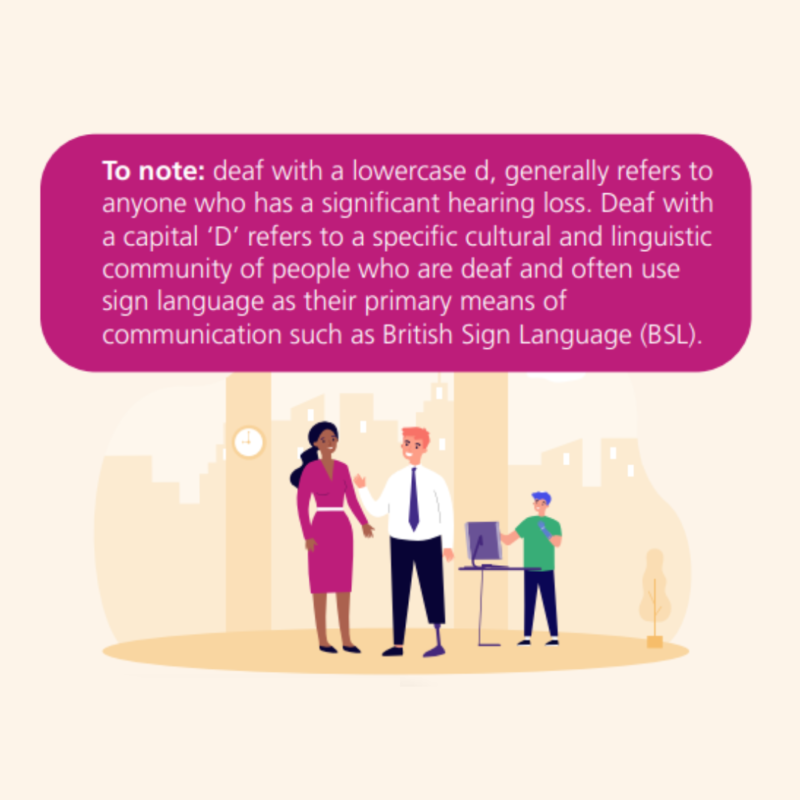
Saadia, a person who is Deaf.
They have hypermobility.

However, if a person identifies more with the social model of disability mentioned earlier in this document, they may prefer to be referred to as ‘a disabled person’ – someone who is disabled by a world that is not equipped to allow them to participate and thrive. Our guidance here would be to listen to how people talk about their disability themselves and take your cue from them.

Avoid ableist language

Ableist language is words, phrases or expressions that have been used historically that discriminate against people with disabilities and mental and physical health conditions and perpetuate stereotypes. For example, avoid ‘wheelchair bound’ and instead use‘ wheelchair user’, or using ‘unusual’ or ‘unique’ instead of ‘crazy’, ‘stupid’ or ‘insane’.