

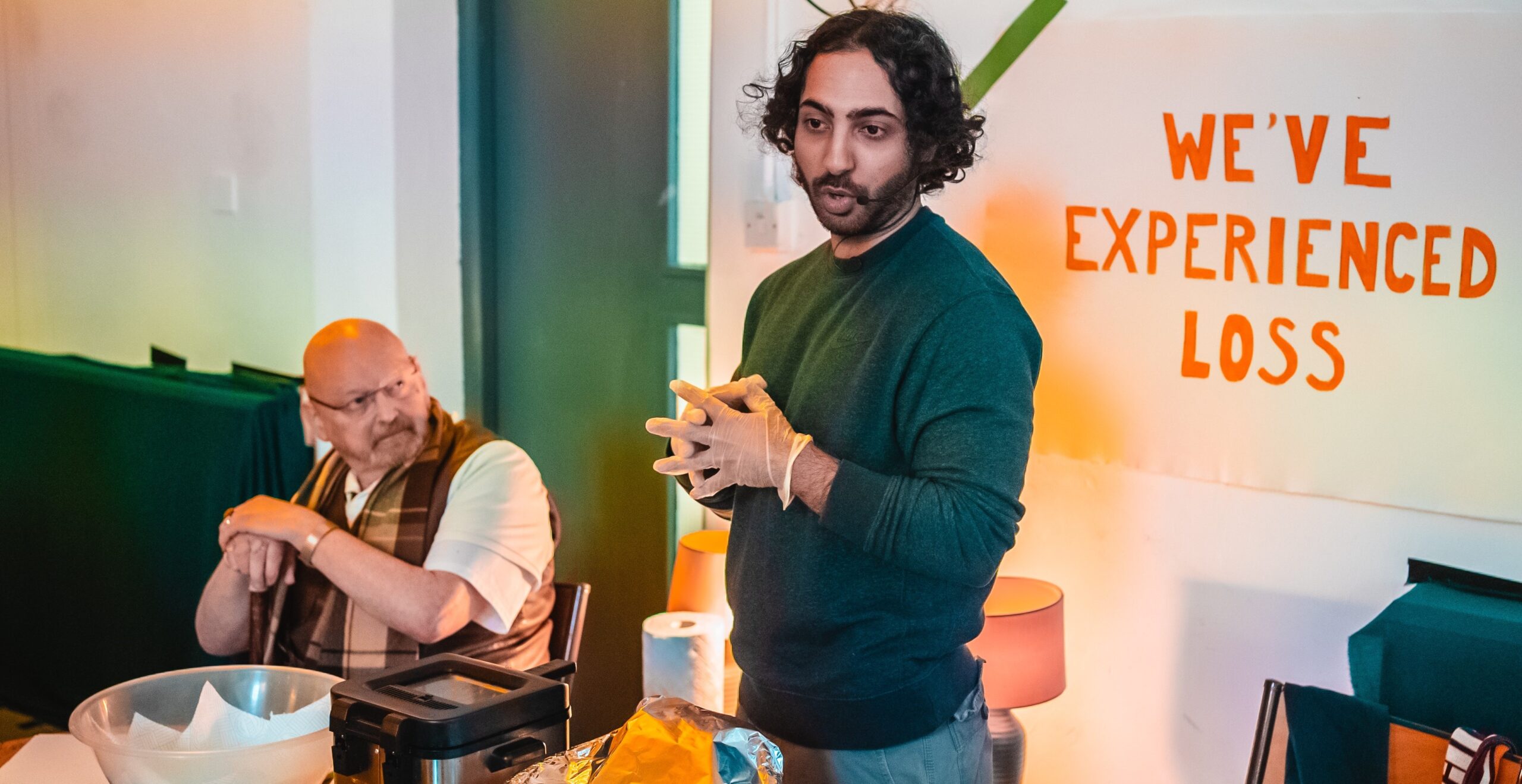
“Lived experience is crucial because it’s important to amplify voices and stories that are hidden in our communities and families. To speak where we were once silenced meant that other people who were in the audience related and felt comfortable sharing their experiences.”
The following blog has been written by the performers of the ‘Still Waiting’ show, held at Girlington Community Centre:
In October, as part of World Mental Health Day (10 October), Common Wealth and Bradford District and Craven Health and Care Partnership hosted audiences across the district to join us for Still Waiting. A live performance and Citizen’s Assembly about lived experiences of mental health, where cast and audiences cooked, talked, and ate together. Our cast was made up of 12 people who all had different experiences of mental health, from different backgrounds, who speak different languages and cover a range of ages – the oldest cast member was in their late 70s and youngest being 18.
The performance was an opportunity to reflect on the three priorities; promote better lives, respect rights, and improve support (accessing support and receiving support) from the Healthy Minds strategy, a strategic plan for mental health, learning disability, neurodiversity, and substance use – blueprint for the next five years. We considered what these terms mean in practice and how they impact real people, there were honest conversations with our cast about how mental health is intersectional, how it links with class, geography, culture, religion, housing, disability, adverse childhood experiences, migration, caregiving, and social isolation. We also reflected on how a lot of stories told about mental health centre on and platform certain voices whereas other stories are not told as visibly or at all – the quieter voices or those that can easily be overlooked.
“I think it’s important to have conversations about mental health with people that have lived experience because that’s how you get the truth about what people need and want out of services, and people who have the power to change the services can hear it directly from us. It is also validating for people with lived experience to hear others’ experiences because it validates what you’ve felt because you’re not alone.”
The experience felt powerful in the sense that the room had a very unique mix of audience members including mental health professionals, older and younger people, community leaders, education providers and students, sanctuary seekers, artists, activists, and the community members of Girlington whose voices, opinions and experiences all carried equal weight in the room.
“Doing this piece of work has allowed us to use our lived experiences, which is so important. We got heard properly for the first time, validated by those who know us as well as strangers and professionals who listened intently for the first time. Mental health is bigger than a subject or medical ideas, it’s real and some of us live through it daily.”
It is important to us that those who work in mental health who are supporting people, humanise the experiences and show the people behind statistics, case studies and reports. We know it is challenging to work in the NHS, council, and the voluntary and community sector in the current climate, our hearts go out to the professionals working tirelessly to support people. We also know too well that sometimes workers can be tired, dismissive, or desensitised or simply not have a good understanding of cultural differences and the significance of them in this context. We wanted to address that every client or patient is different and has a unique experience, and a person-centred approach to care makes the biggest difference to people with mental health issues.
We are very grateful for being given the opportunity to use creative expression to develop a safe space where people were able to share their stories, have meaningful and impactful conversations, do our bit to remove stigma and shame around mental health and instigate change to make small changes to improve support and services across Bradford District and Craven. We want to say thanks to those who not only gave up their time to listen to people’s experiences but do more than listen – you interacted, you built bridges and you showed that lived experience does matter.